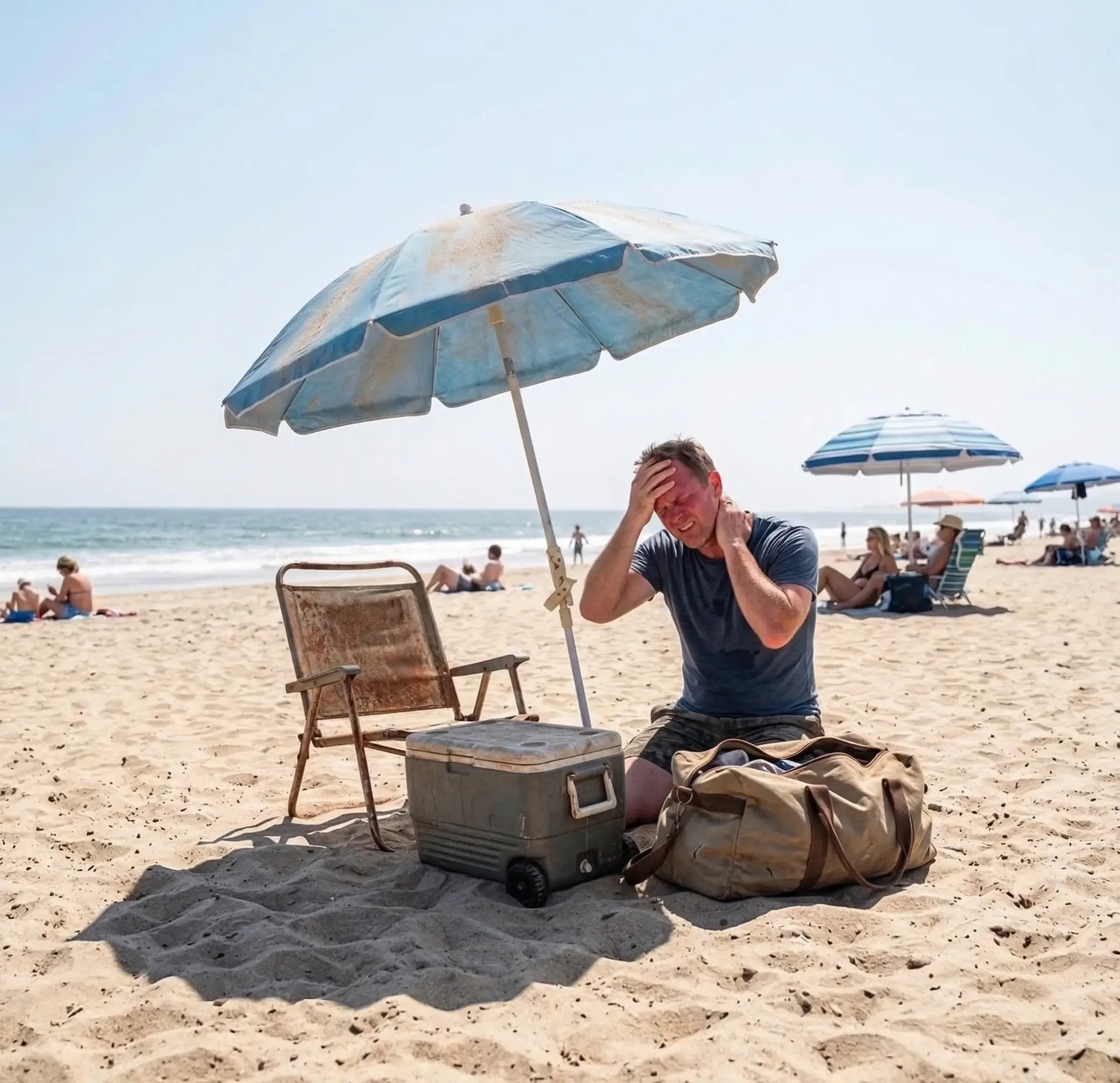
The beach promises escape, relaxation, and endless blue horizons. Yet for many of us, a day by the water becomes a battle against the elements: squinting at our phones through glare, nursing a sunburned neck, or abandoning our favorite book because the sun makes reading impossible. The irony is that we've been solving this problem the same way for decades, hauling increasingly cumbersome gear across the sand in search of shade that actually works.
The truth is, most traditional sun protection solutions force you to choose between comfort, convenience, and the ability to actually enjoy your time at the beach. Understanding your options—and their real limitations—is the first step toward finding a setup that truly fits your lifestyle.
The Traditional Beach Sun Protection Arsenal
Beach Tents: The Heavy Compromise
Beach tents promise comprehensive coverage, and in theory, they deliver. A quality tent can shade an entire lounging area and protect you from both sun and wind. The problem emerges the moment you try to transport one. Most beach tents weigh between 3 and 5 kilograms and require assembly with multiple poles, stakes, and guy lines. On a breezy day, setup becomes a frustrating wrestling match. Even worse, once erected, they trap heat underneath, creating a stuffy microclimate that defeats the purpose of being at the beach. You're essentially sitting in a fabric oven, and the moment you step outside your tent's footprint, you're back to square one.
Rental Sunbeds with Umbrellas: Paying for Convenience
Beach clubs and resorts offer sunbed rentals with attached umbrellas, and the appeal is obvious: someone else handles setup, and you get a cushioned lounger. The catch is financial and logistical. Daily rental costs add up quickly, especially across a week-long holiday. You're also locked into whatever location the rental operator has chosen, which may not align with where you actually want to spend your day. Perhaps most frustratingly, even with an umbrella overhead, lying flat on a hard sunbed creates neck strain that no amount of shade can fix. The angle of recline is fixed, and your cervical spine pays the price.
The Towel-Over-the-Head Method: Free but Suffocating
This budget approach costs nothing and requires zero setup, which explains why so many people resort to it. Drape a towel over your head and shoulders, and you've created instant shade. The downsides, however, are severe. A towel traps heat around your face and neck, making you feel suffocated within minutes. You cannot read comfortably because the fabric blocks your view. Scrolling your phone becomes impossible without lifting the towel and exposing yourself to glare. There's no neck support whatsoever, and the entire experience feels more like hiding than relaxing. It's a solution born of desperation, not design.
Sunglasses: Protecting Your Eyes, Missing the Bigger Picture
Quality sunglasses are essential for eye protection and absolutely part of any beach day. They shield your eyes from UV damage and reduce squinting. However, sunglasses solve only one piece of the puzzle. They do nothing to block the glare that bounces off your phone or book screen, which is often more blinding than direct sunlight. They provide no shade for your face, forehead, or neck—the areas most vulnerable to sun damage and heat stress. And they certainly don't address the ergonomic nightmare of lying flat on sand with no neck support. Sunglasses are necessary but insufficient.
Heavy Parasols and Umbrellas: Classic, But Exhausting
The traditional beach umbrella or parasol has been a staple for generations, and for good reason: a large canopy creates genuine shade. The problem is purely practical. Carrying a full-sized parasol across hot sand is genuinely exhausting, especially if you're also managing a bag, towel, and other beach essentials. Once you reach your spot, anchoring it securely becomes a puzzle. Sand anchors work until the wind picks up, at which point your umbrella becomes a sail. A gust can send it tumbling across the beach, and you're left chasing it or abandoning it altogether. The weight and bulk also make them impractical for anyone who likes to move around or explore different beach areas during the day.
The Real Problem Nobody's Solving
After evaluating these traditional approaches, a pattern emerges. Each solution sacrifices something essential: convenience, comfort, portability, or actual functionality. You're forced to choose between shade and mobility, between eye protection and screen visibility, between coverage and the ability to move your head without pain.
The two complaints that dominate every beach conversation are remarkably consistent. First, the sun's glare on phone and book screens makes it nearly impossible to read or scroll without squinting and straining. Second, lying on sand—even with a pillow—creates painful neck cramps that linger long after you've left the beach. These aren't minor inconveniences. They're the reasons people cut beach days short or avoid the beach altogether during peak sun hours.
You don't need a bigger umbrella. You need a smarter solution.
The Modern Alternative: Engineering Comfort Into Your Beach Day
What Makes a Truly Effective Beach Shade Solution
An ideal beach sun protection system would need to accomplish several things simultaneously. It should provide genuine UV protection without the weight and setup hassle of traditional tents. It should eliminate screen glare so you can actually read or use your phone. It should support your neck and head in a way that prevents the strain that comes from lying flat. It should be light enough to carry easily and quick enough to deploy that setup doesn't become a chore. And it should look intentional and premium, not like you're improvising with whatever was available.
BLYND is engineered specifically around these requirements. It's a personal, portable premium beach head shade with a built-in pillow—essentially a sanctuary for your head and neck that travels with you.
UV Protection That Actually Works
The fabric is constructed from UPF 50+ premium cotton canvas, which blocks 99 percent of UV rays. According to The Skin Cancer Foundation's guidelines on sun-protective clothing, a UPF rating of 50 qualifies as 'excellent' protection, as it acts as a genuine physical shield rather than just filtering light.This isn't a thin, translucent material that lets light filter through. It's a genuine physical shield that creates real shade, not the semi-transparent coverage you get from a standard beach umbrella or tent. The canvas is dense enough to eliminate glare on screens while remaining breathable enough that you don't feel trapped or suffocated underneath it.
Engineered Ergonomics for Neck Relief
The built-in pillow is constructed from plush memory foam, and it's paired with a 4-level precision height control system. This means you can adjust the angle and elevation of your head to find the exact position that relieves neck strain. Unlike a sunbed umbrella or a towel-based solution, BLYND actually supports your cervical spine in a way that prevents the cramping and discomfort that comes from lying flat on sand. The engineering is deliberate: your neck gets support, your eyes get shade, and your screen becomes readable again.
Portability That Doesn't Compromise on Build Quality
The entire unit weighs just 2 kilograms and folds completely flat, sliding into an included free tote bag. This is roughly one-third the weight of a standard beach tent and a fraction of the bulk of a traditional parasol. You can carry it in one hand while managing everything else you need for a beach day. Setup takes under 10 seconds: unfold and lock it in. There are no poles to assemble, no stakes to drive, no guy lines to tension. You arrive at your spot, deploy BLYND, and you're immediately in your own personal shade sanctuary.
Premium Materials That Last
The frame is built from ethically sourced FSC-certified sustainable African wood with elegant golden accents. This is a deliberate choice that distinguishes BLYND from competitor products that rely on flimsy plastic frames.